Screen-time apps take different approaches: some add a pause before you open an app, while others set limits or block access outright. The best fit depends on the moments you want help with. Here's how five apps compare, checked against each developer's Android listing in September 2026.
Quick comparison
Android only. Tap a cell marked "Some" to see the catch.
- Yes
- Some support
- Paid
- Not verified
- Planned
- No
| Feature |  Screentide Screentide |  ScreenZen ScreenZen |  AppBlock AppBlock |  one sec one sec |  StayFree StayFree |
|---|---|---|---|---|---|
| Android essentials | |||||
| Websites | |||||
| Usage limits | |||||
| Recurring schedules | |||||
| Calendar sync | |||||
| Location triggers | |||||
| NFC / QR triggers | |||||
| Mindful pauses | |||||
| In-app friction | |||||
| Full blocks | |||||
| App usage history | |||||
| Website usage history | |||||
| Usage trends | |||||
| Streaks | |||||
| Also on iOS | |||||
| Price |
View sources
- ScreenZen on Google Play
- ScreenZen website and FAQ
- AppBlock Android help
- AppBlock free and Premium features
- one sec on Google Play
- one sec peer-reviewed six-week study (PNAS)
- What's included in one sec pro
- one sec Android block schedules
- one sec Android Reels and Shorts
- one sec Android website limitations
- StayFree on Google Play
See the full Android feature comparison for more detail on Screentide, ScreenZen, Opal, AppBlock and one sec.
1. Screentide
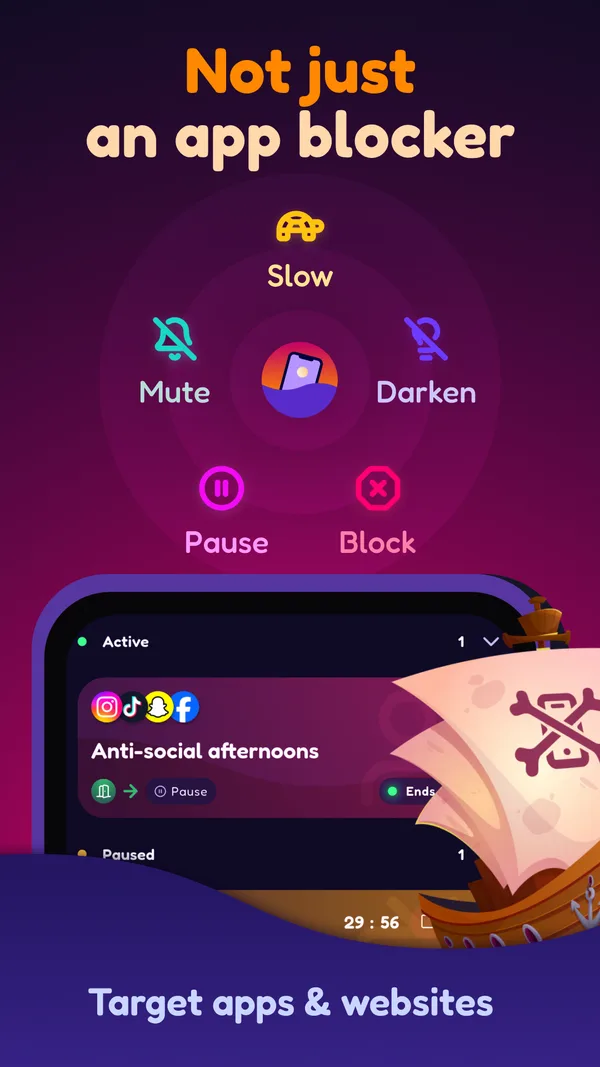
Blocking isn't your only option, nor are simple usage limits. Interventions like Slow can make a distracting app less addictive.
- Best for
- People whose days don't run to a fixed schedule, and who want more options than pause or block.
- Price
- Free for 3 rules. Gold is a low-cost subscription or a one-time purchase.
How it works
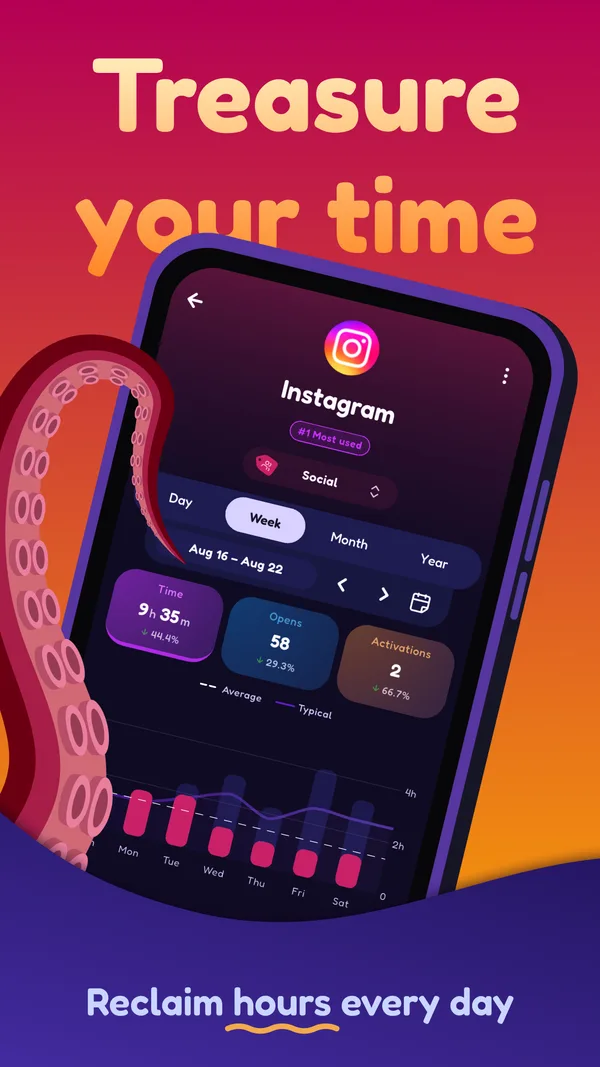
Pick your apps and sites, choose when the rule applies (a schedule, calendar event, usage limit or location), then Slow, Tint, Mute, Pause (with an optional breathing exercise) or Block.
Where it shines
- Screentide offers more than blocks: Slow can reduce video loading in TikTok or Instagram while leaving messaging available.
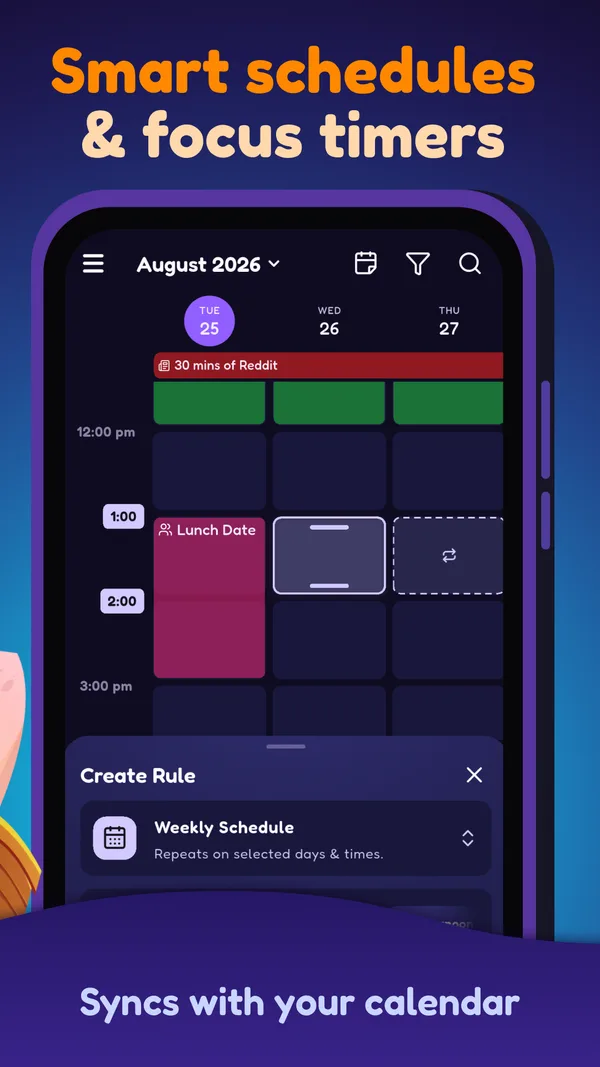
- Calendar Sync runs your rules during your real calendar events, from one lecture to every event titled "meeting", and moves them when those events move.
- Location, Wi-Fi and NFC triggers are free. A rule can start when you reach the office or tap an NFC tag by your bed.
Where it falls short
- No streaks (yet), and Android only for now.
- More than 3 rules needs Gold.
- Shorts and Reels blocking is planned. Slow can add friction to video feeds while keeping messaging available; results can vary by app and connection.
Our take
If your boundaries need to follow changing plans, Screentide's calendar and location triggers are worth a look.
Open Screentide in Google PlaySources: Google Play listing, Android feature comparison.
2. ScreenZen
ScreenZen's free plan includes plenty of features, and the app is available on phones and computers.
- Best for
- People who want one free app to rein in everything, on phone and computer.
- Price
- Free to use, with optional donations to support development.
How it works
You wait before an app opens, and the wait grows each time you come back.
Where it shines
- The delay grows with every open, and you can cap how many times a day an app unlocks.
- Prompts like "What are you seeking?" turn each open into a conscious choice.
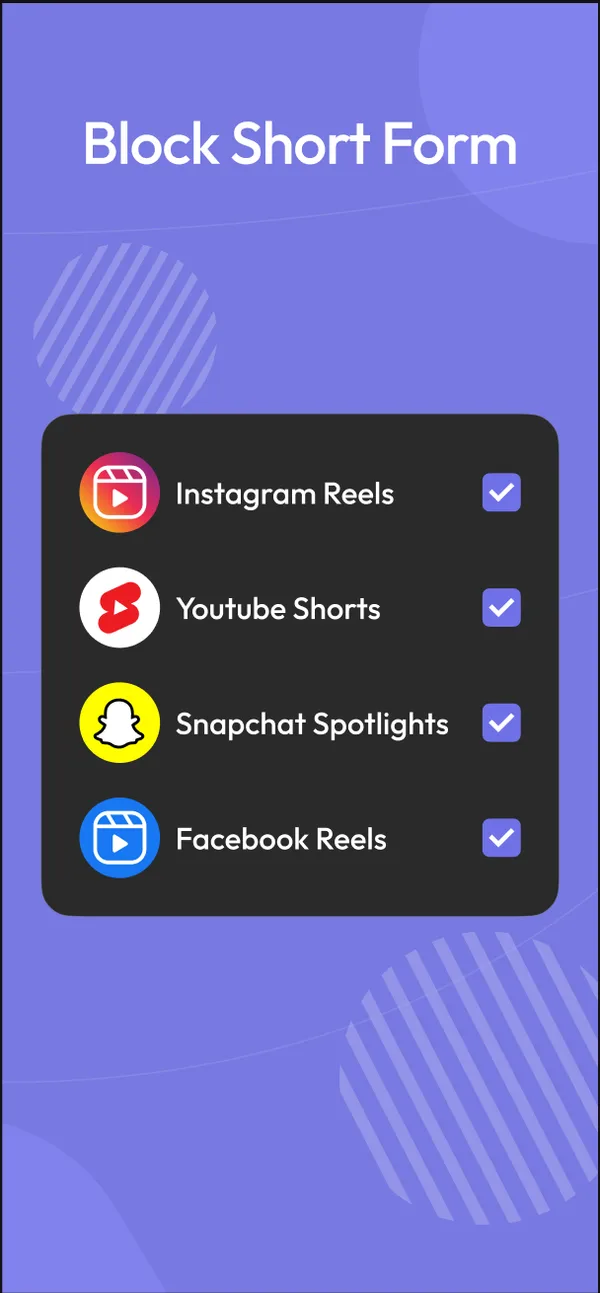
- Free on Android, iOS, macOS and Windows, with Shorts and Reels blocking and streaks.
Where it falls short
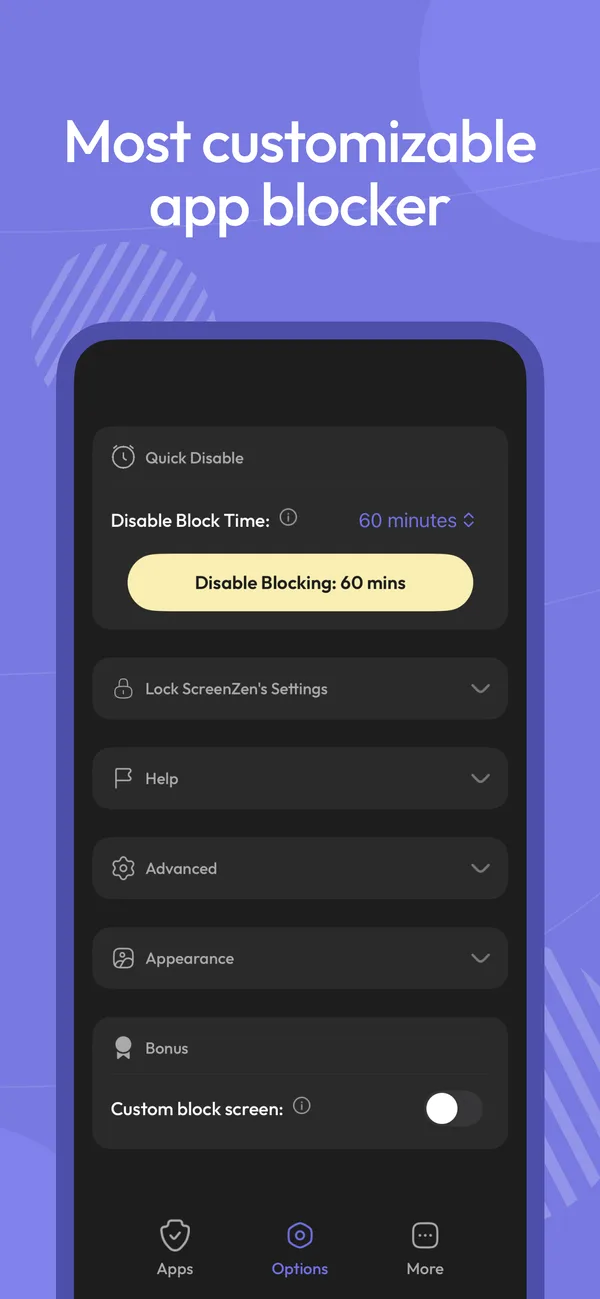
- Its approach centres on mindful pauses, limits and blocks; it doesn't offer feed slowdowns or a colored tint overlay.
- No calendar, location or Wi-Fi triggers.
- Usage stats are basic, and only cover the apps you limit.
Our take
ScreenZen is a strong free choice for recurring routines. If your plans change with calendar events or location, Screentide can follow those changes.
Open ScreenZen in Google PlaySources: Google Play listing.
3. AppBlock
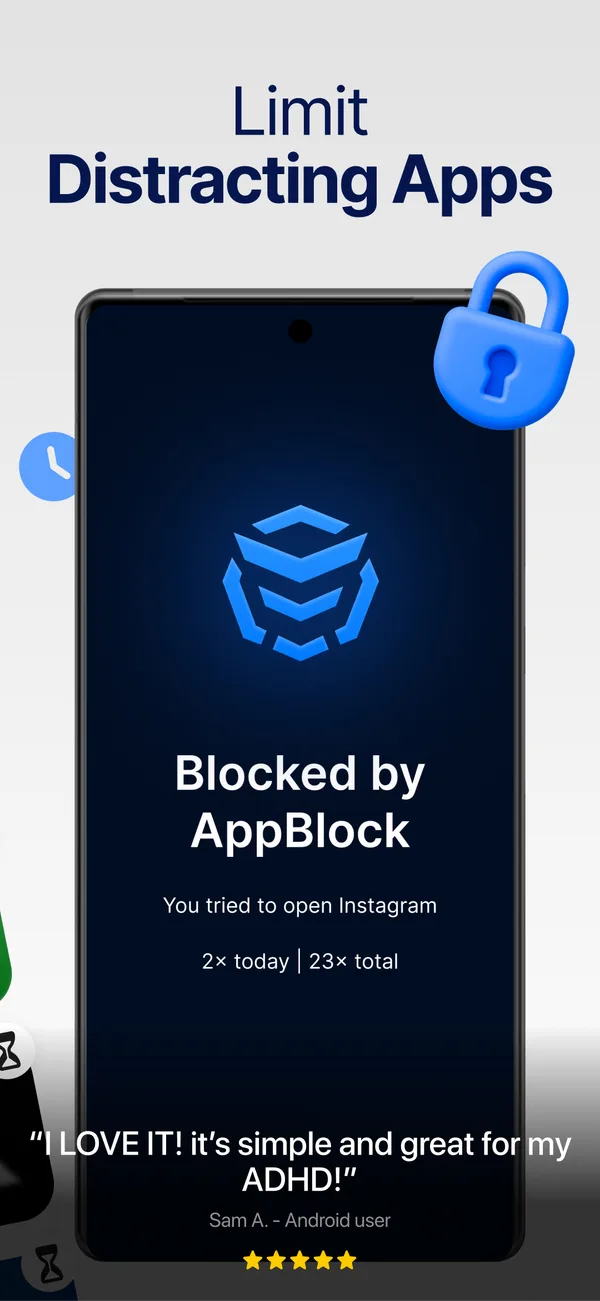
AppBlock blocks selected apps outright, either immediately or on a schedule.
- Best for
- People who know exactly what they want blocked, and when.
- Price
- Free with tight limits. Premium is a subscription or a lifetime purchase.
How it works
Block instantly, or on a schedule by time, location or Wi-Fi.
Where it shines
- Profiles run by time, day, location or Wi-Fi, so Work mode starts when you arrive.
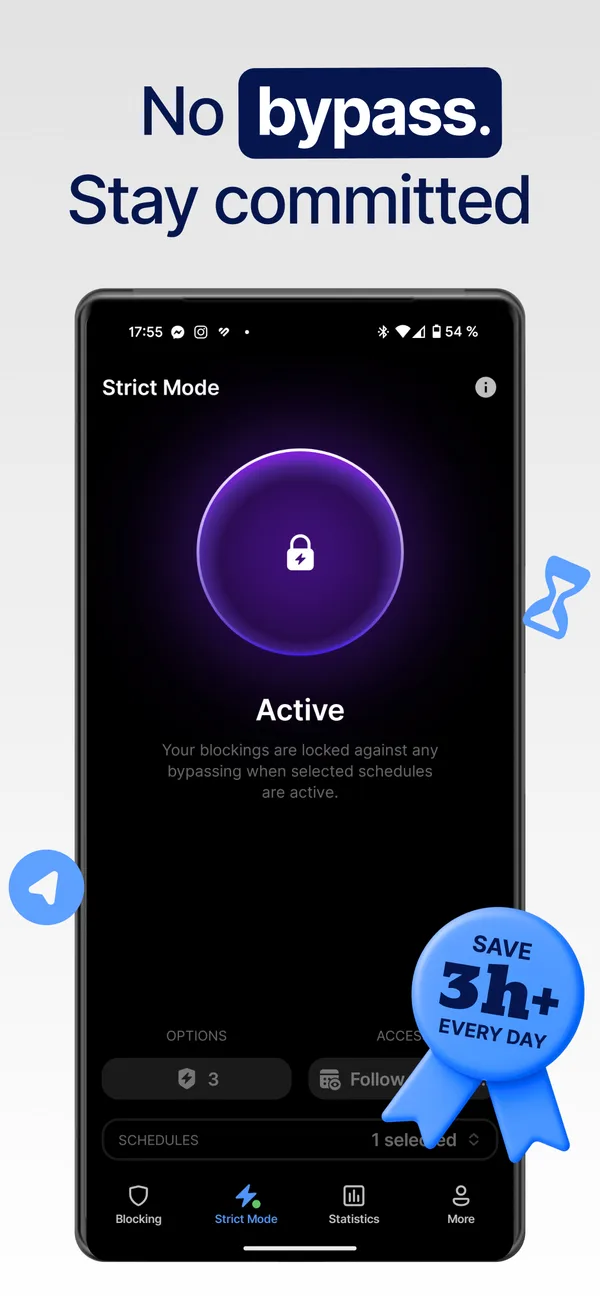
- Strict Mode adds cooldowns and third-party approval, so an impulse can't undo a block.
- Allowlist mode blocks everything except your essentials, for a near-dumbphone.
Where it falls short
- Free schedules cap at 5 apps and 5 sites, and usage limits at 30 minutes a day.
- Its core approach is setting limits and blocking access, rather than slowing a feed or applying a colored tint.
- Free Strict Mode tops out at 24 hours, and some unlock conditions need Premium.
Our take
AppBlock is a good fit if you want a firm block, though it may frustrate you if you often switch blockers off.
Open AppBlock in Google PlaySources: Google Play listing, Android blocking conditions, Free and Premium features, Strict Mode settings.
4. one sec
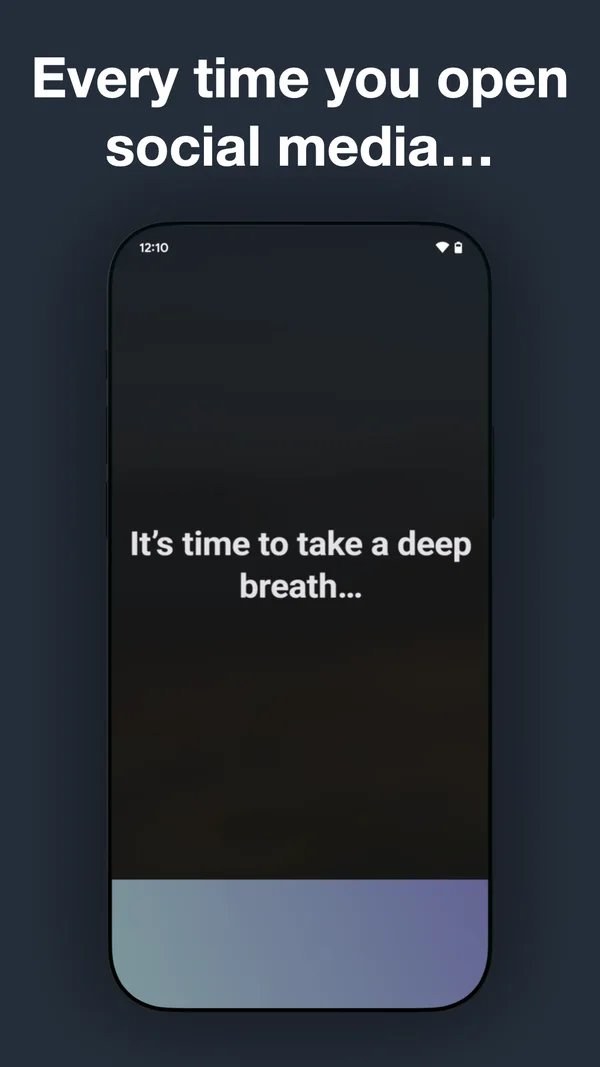
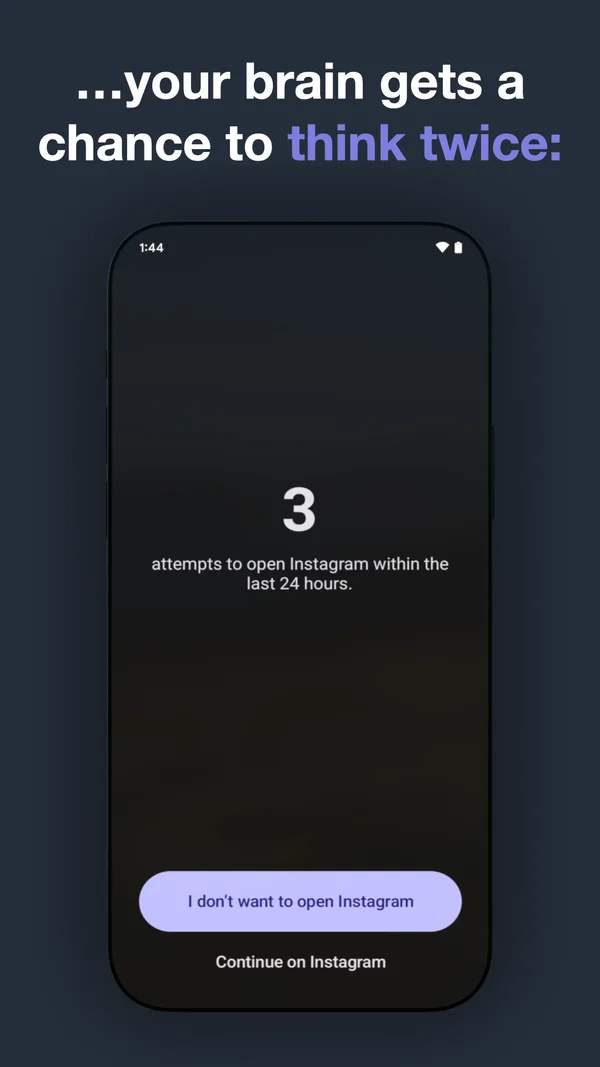
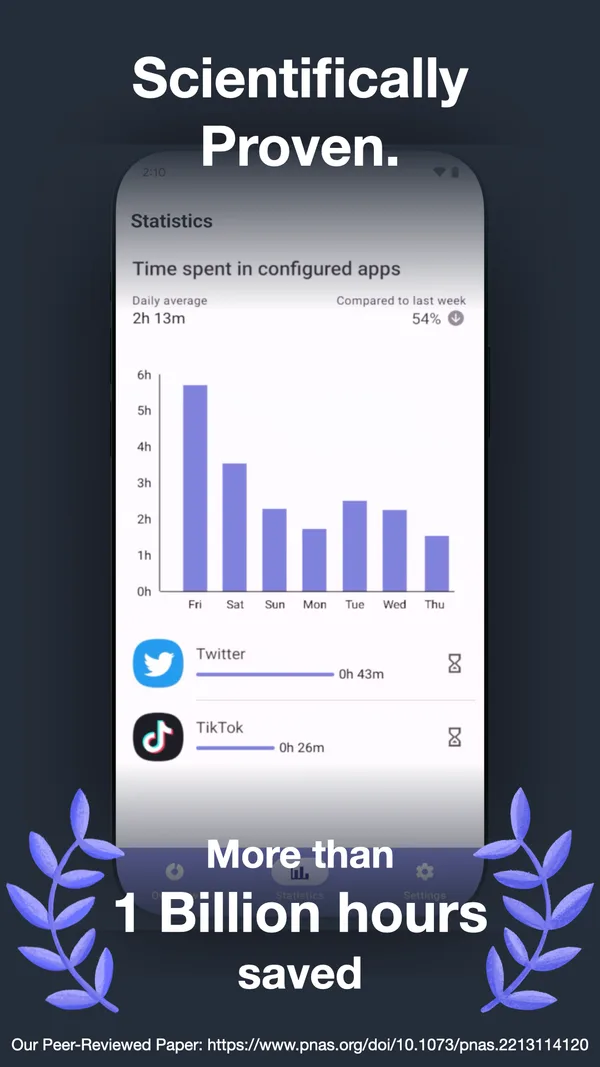
one sec uses a breathing prompt before opening apps, and a six-week study evaluated its effect on app openings.
- Best for
- People who just want to cut down on one app.
- Price
- Free for one app. Pro is about US$19 a year.
How it works
Opening a target app starts a short breathing exercise first.
Where it shines
- A six-week study found 57% fewer openings of selected apps by the end among 280 one sec users who completed it. The study tested the full intervention, not breathing alone.
- Intention and emotion check-ins show how each app affects your mood.
- Re-interventions nudge you again when a session runs long.
Where it falls short
- Free covers just one app.
- On Android, pro doesn't include the extra intervention types, website blocking or strict sessions.
- Scheduled blocks on Android are still in beta.
Our take
one sec is a good fit if you want a pause before opening one app. For broader Android schedules or stricter blocks, compare AppBlock and Screentide too.
Open one sec in Google PlaySources: Google Play listing, Peer-reviewed six-week study (PNAS), Android block schedules, Android website intervention.
5. StayFree
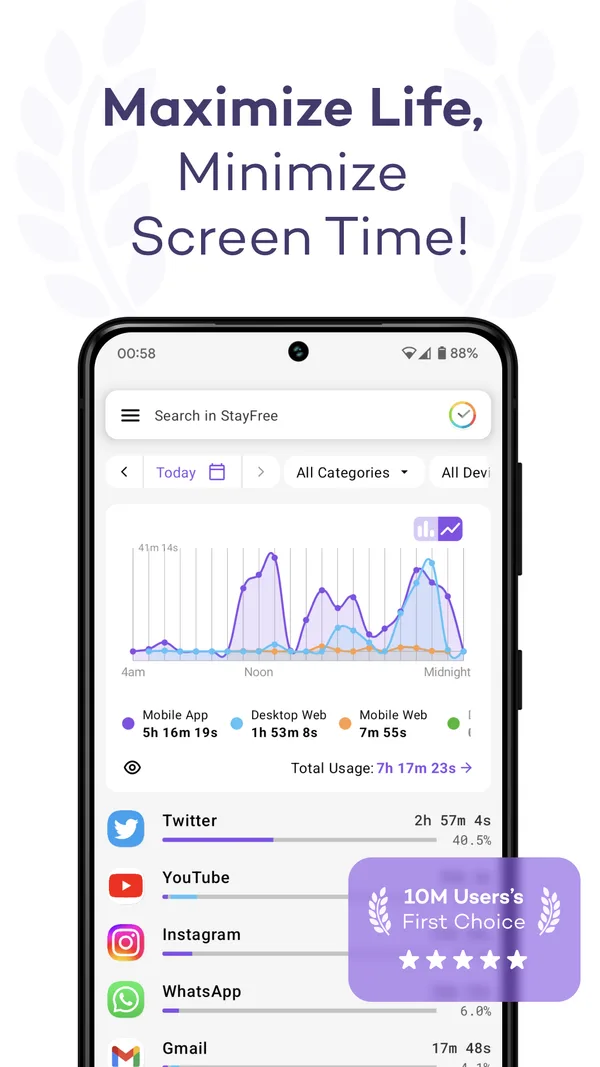
StayFree offers detailed reports across devices, with blocking alongside its tracking features.
- Best for
- People who want to see where their time goes before changing anything.
- Price
- Free, with optional Premium. No ads.
How it works
Tracks app and website use on phone, computer and watch, and nudges you when you overdo it.
Where it shines
- The deepest cross-device reports here, including CSV export.
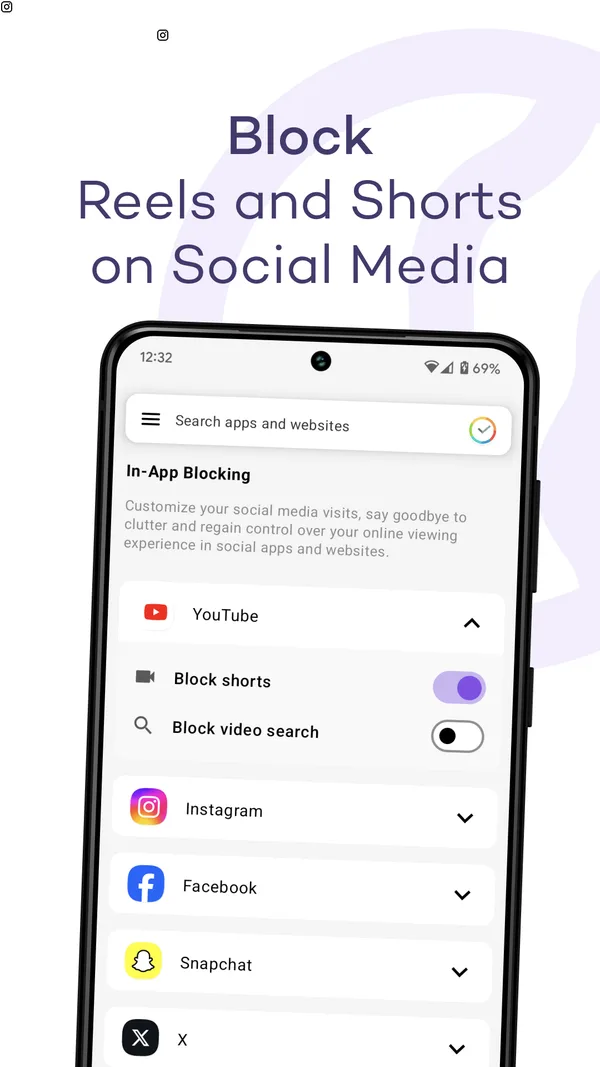
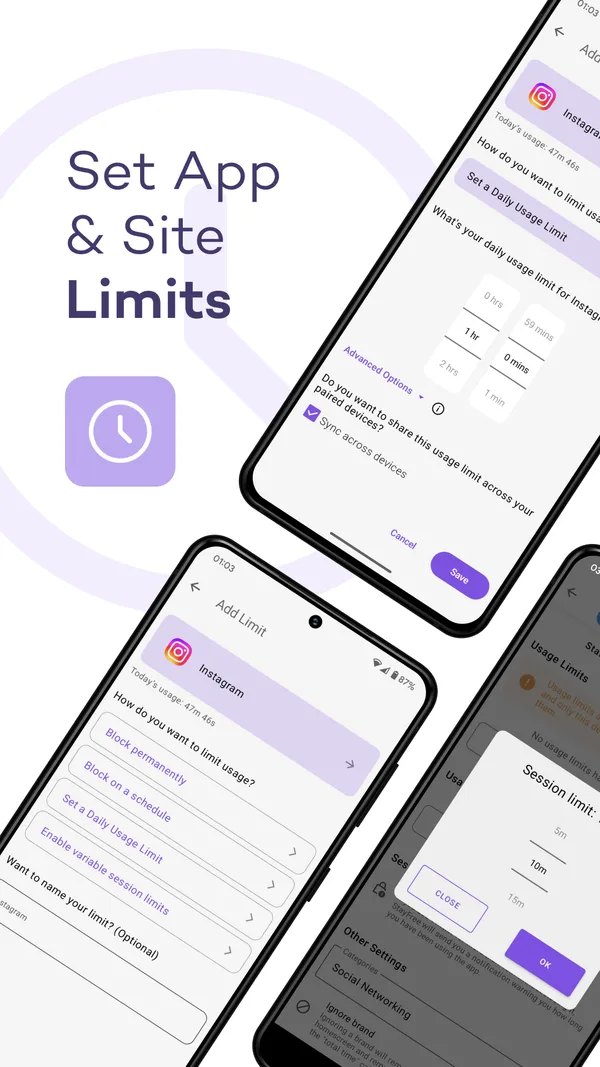
- Daily, session and category limits, plus in-app blocking that hides the most addictive parts of feeds.
- No ads, and no account needed to sync devices.
Where it falls short
- It focuses on tracking, reminders, limits and blocking rather than a pause every time an app opens.
Our take
A strong tracker with useful blocking too; consider another app if you want calendar triggers or gradual friction while you scroll.
Open StayFree in Google PlaySources: Google Play listing.
Which one should you pick?
- “I open apps before I’ve even decided to.” A pause catches the reflex. one sec if it’s one app, ScreenZen or Screentide if it’s several.
- “I meant to check one thing and lost 40 minutes.” Screentide’s Slow and Tint change the feed while you use the app: scrolling can slow down or a colored tint can grow stronger the longer you stay.
- “I need my phone out of reach during work or sleep.” AppBlock, or Screentide if you’d like the option of an emergency unlock.
- “My week is never the same twice.” Screentide’s Calendar Sync runs your rules during your real events.
- “I honestly don’t know where my time goes.” StayFree or Screentide. Both show your app and website history and trends.
The bottom line
No single app is best for everyone. Think about when you most often lose time, then choose an app and a rule that could help in that situation.